Browse Disasters
Explore aviation's most significant accidents. Filter by category, search by location or aircraft, and sort by impact.
Showing 15 disasters
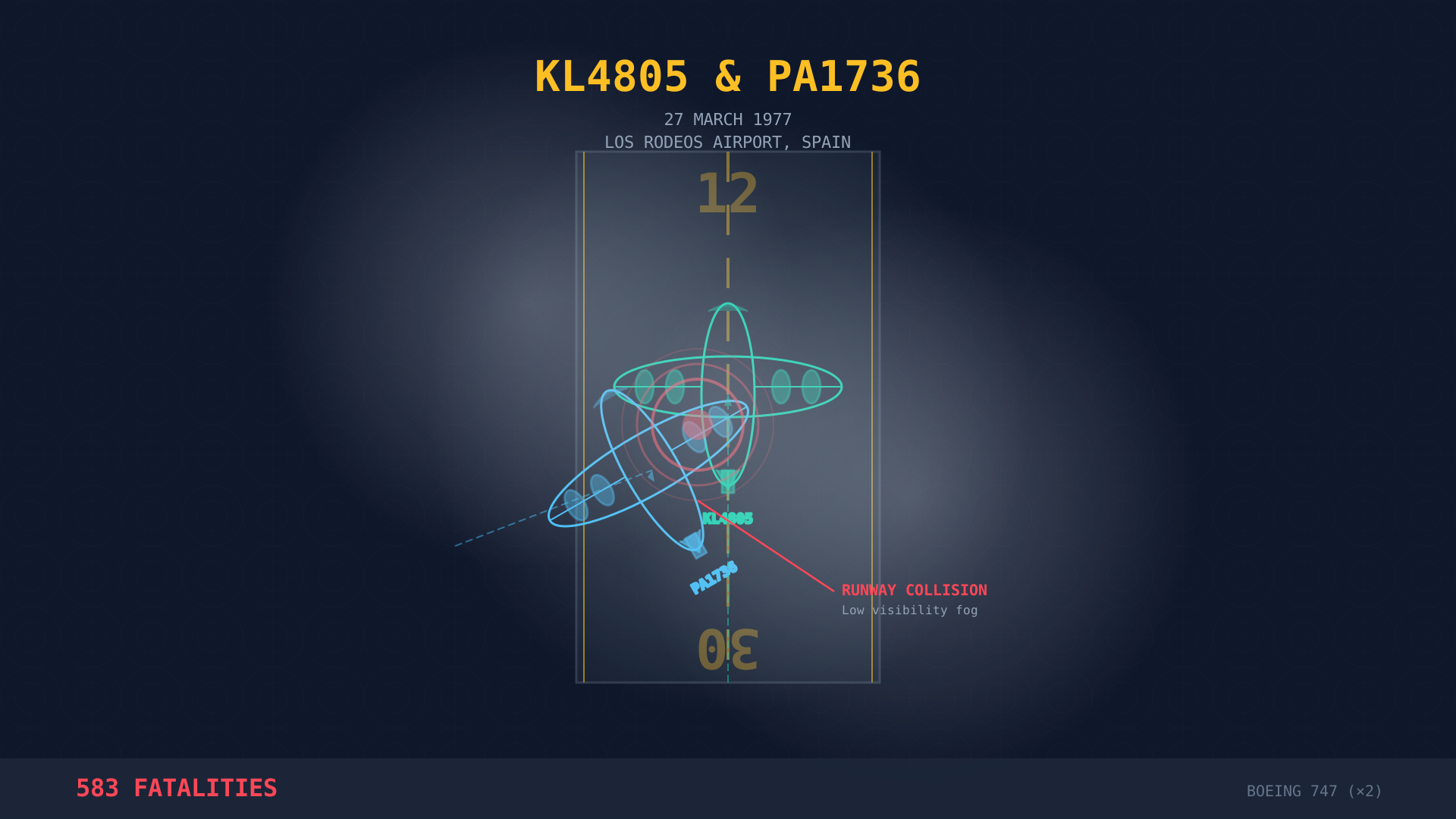
March 27, 1977
Tenerife Airport Disaster
Two Boeing 747 jumbo jets collided on a foggy runway at Los Rodeos Airport, killing 583 people in the deadliest aviation accident in history.
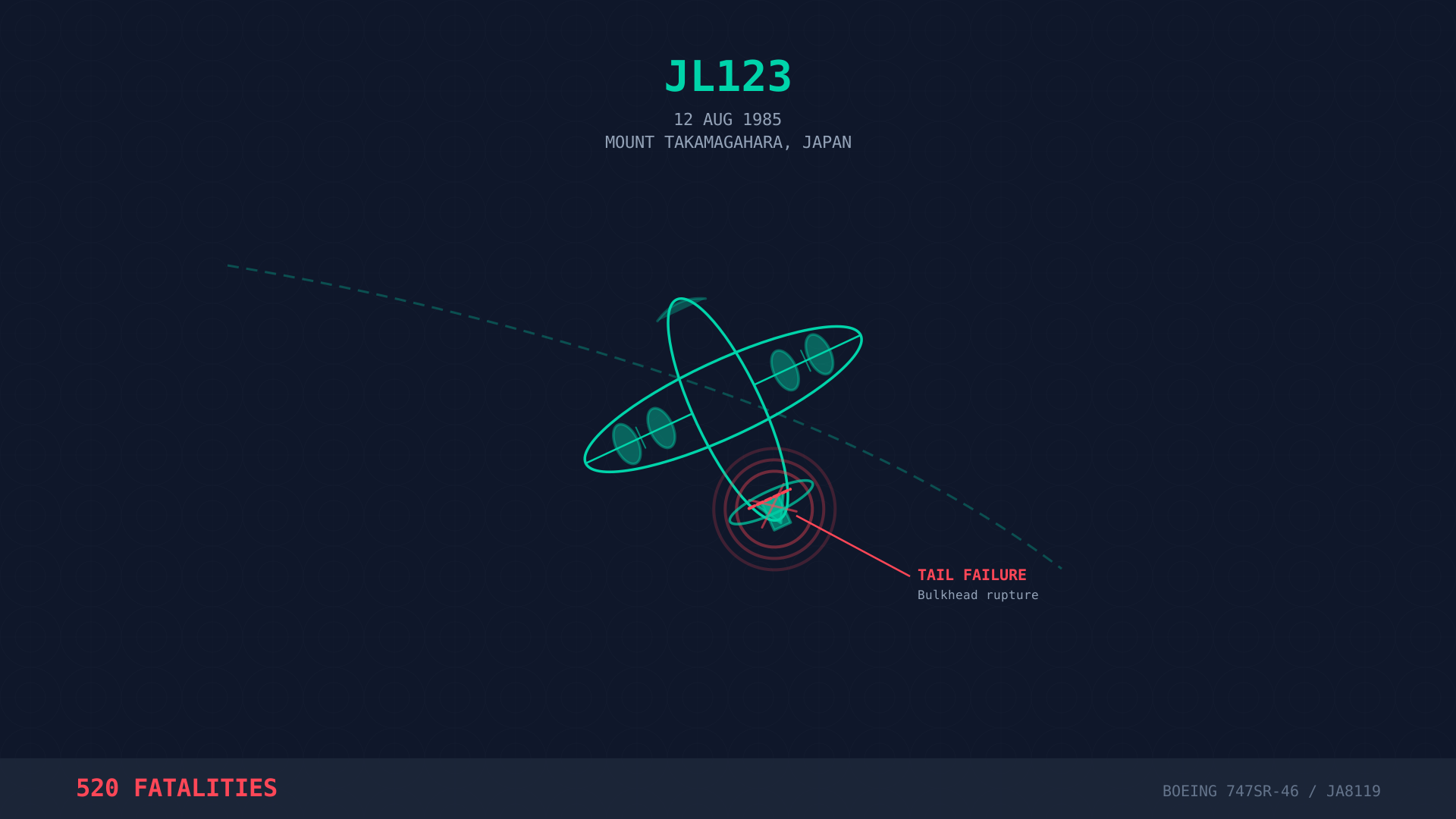
August 12, 1985
Japan Airlines Flight 123
A catastrophic bulkhead failure caused explosive decompression and loss of control, resulting in the deadliest single-aircraft accident in aviation history with 520 fatalities.
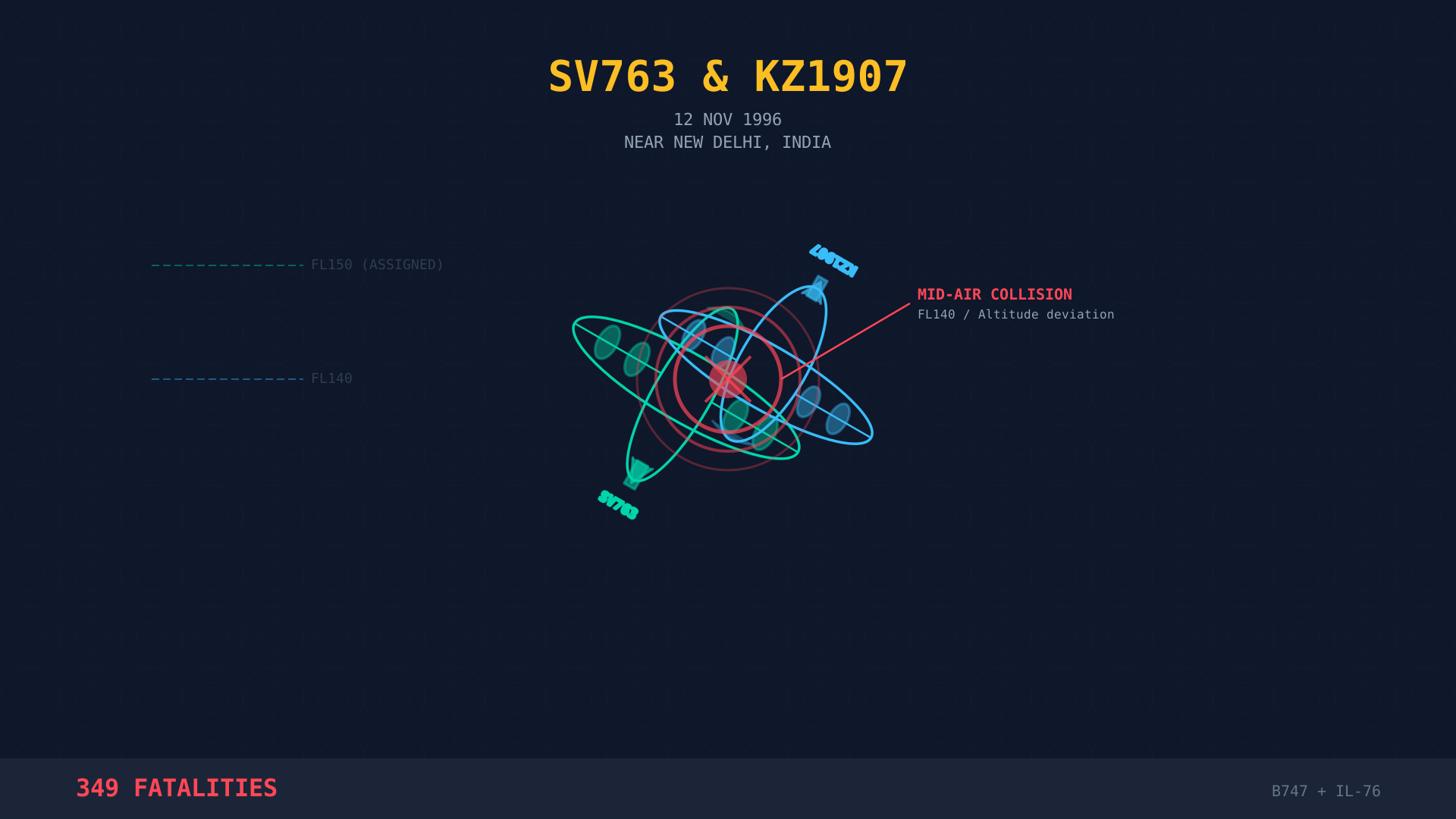
November 12, 1996
Charkhi Dadri Mid-Air Collision
Two aircraft collided in mid-air near Delhi when a Kazakhstan Airlines flight descended into the path of a climbing Saudi Arabian Airlines 747, killing all 349 people aboard both planes.
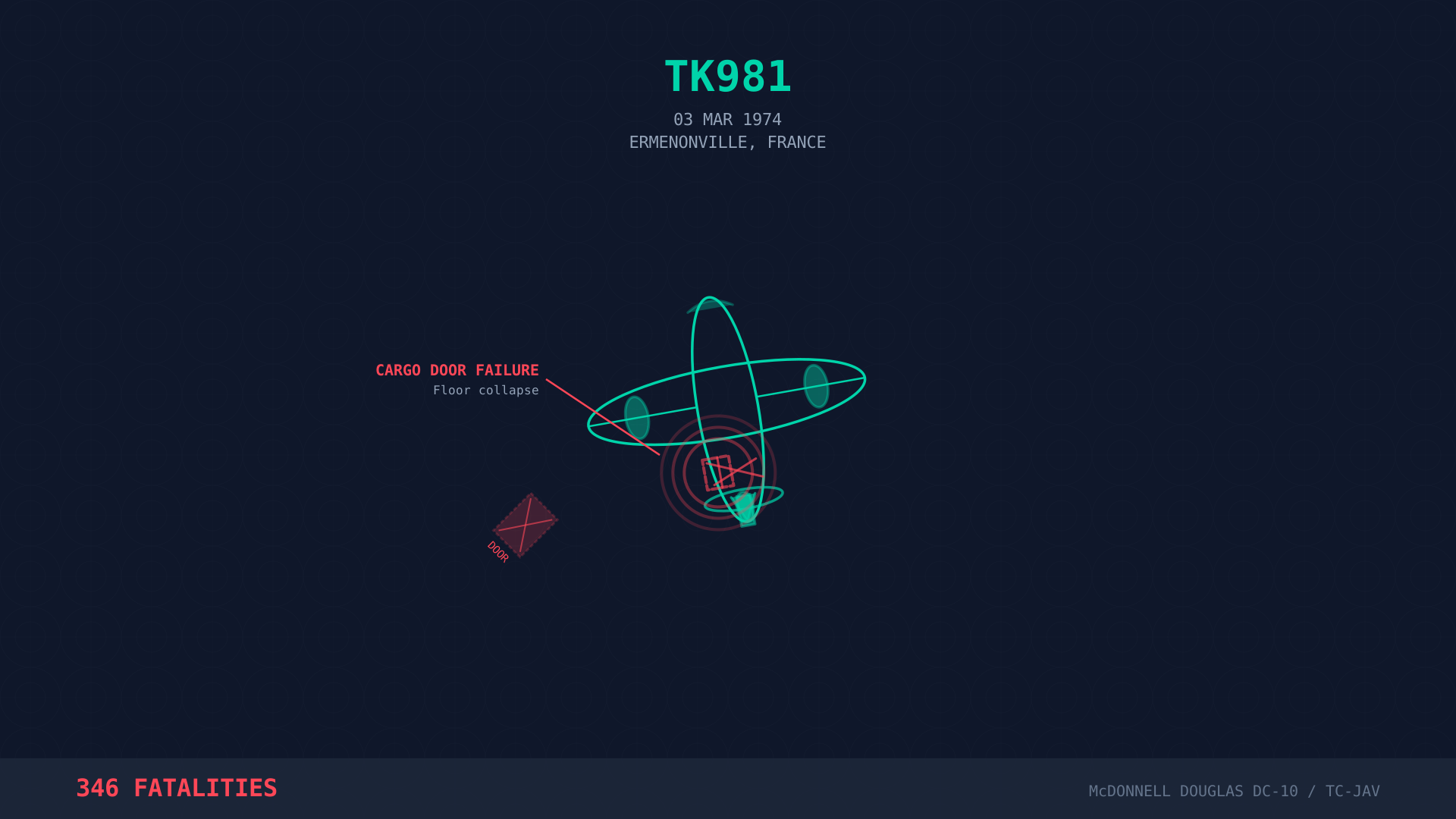
March 3, 1974
Turkish Airlines Flight 981
A DC-10's cargo door blew off shortly after takeoff from Paris, causing explosive decompression and floor collapse that severed flight controls, killing all 346 aboard in aviation's deadliest single-aircraft accident at the time.
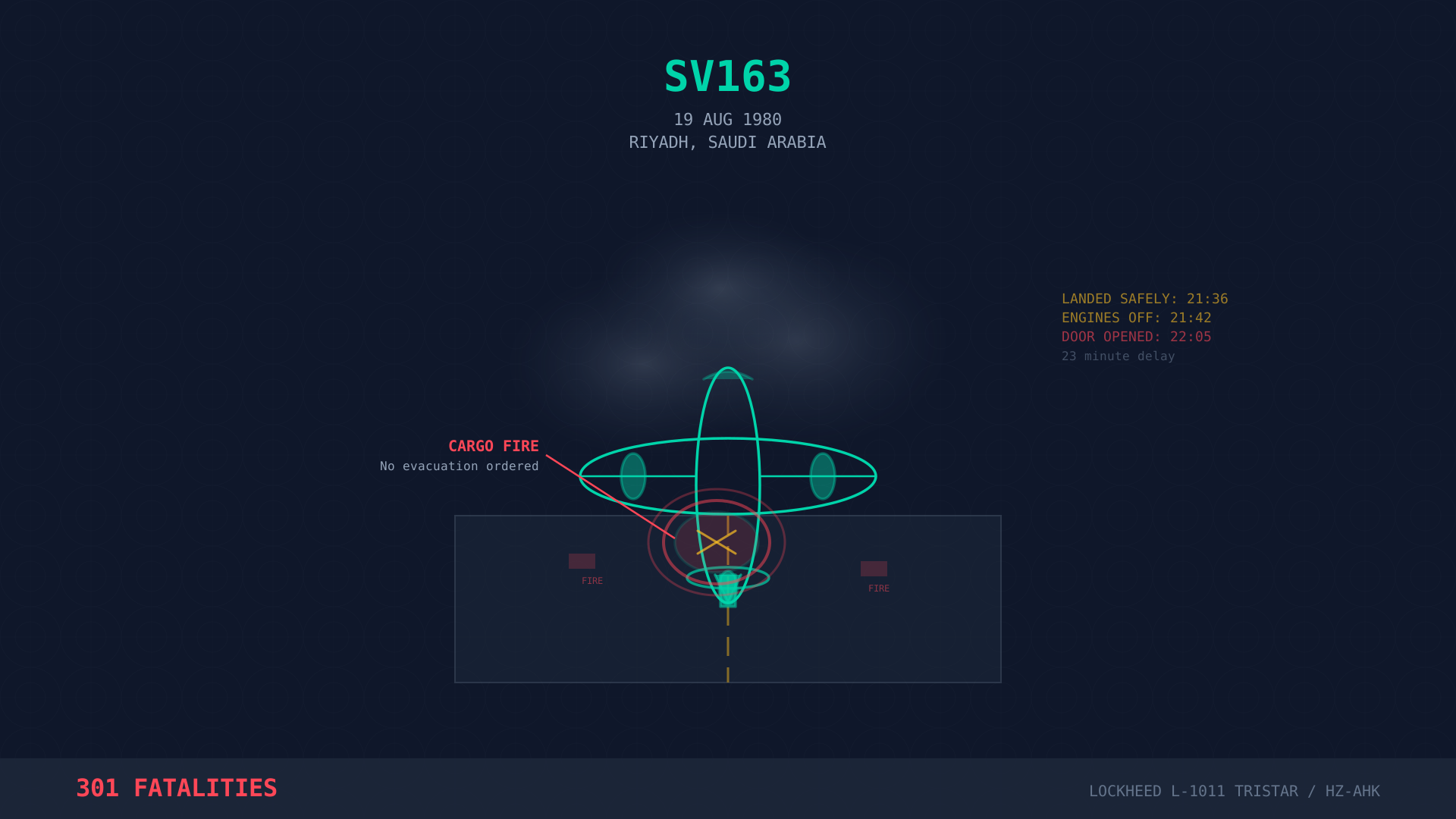
August 19, 1980
Saudia Flight 163
After smoke warnings, the crew made a successful emergency landing in Riyadh, but inexplicably failed to evacuate for over 20 minutes, resulting in all 301 people dying from smoke inhalation in a tragedy that should have had survivors.
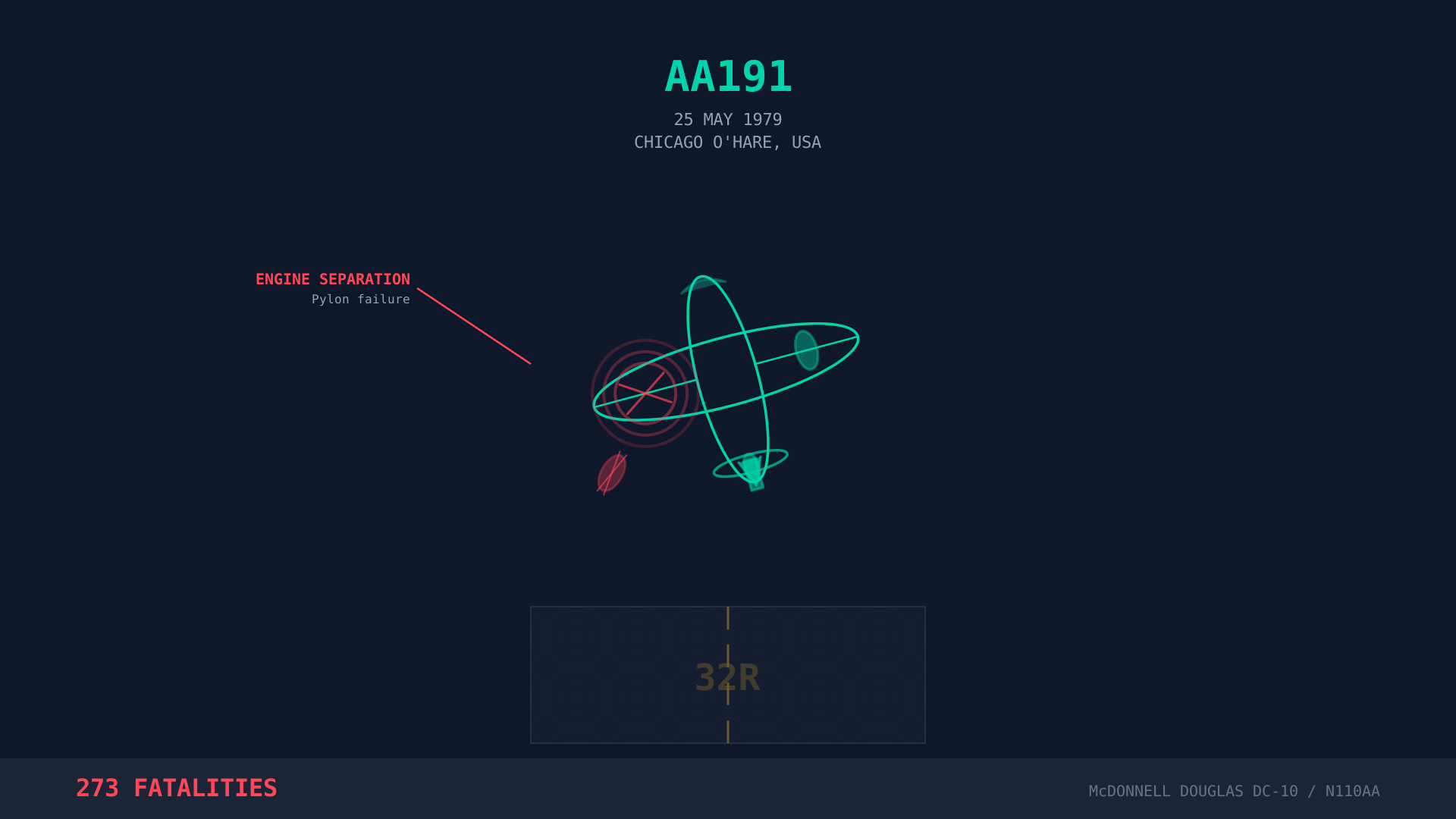
May 25, 1979
American Airlines Flight 191
The left engine and pylon separated from a DC-10 during takeoff at Chicago O'Hare, causing loss of control and the deadliest aviation accident in U.S. history with 273 fatalities.
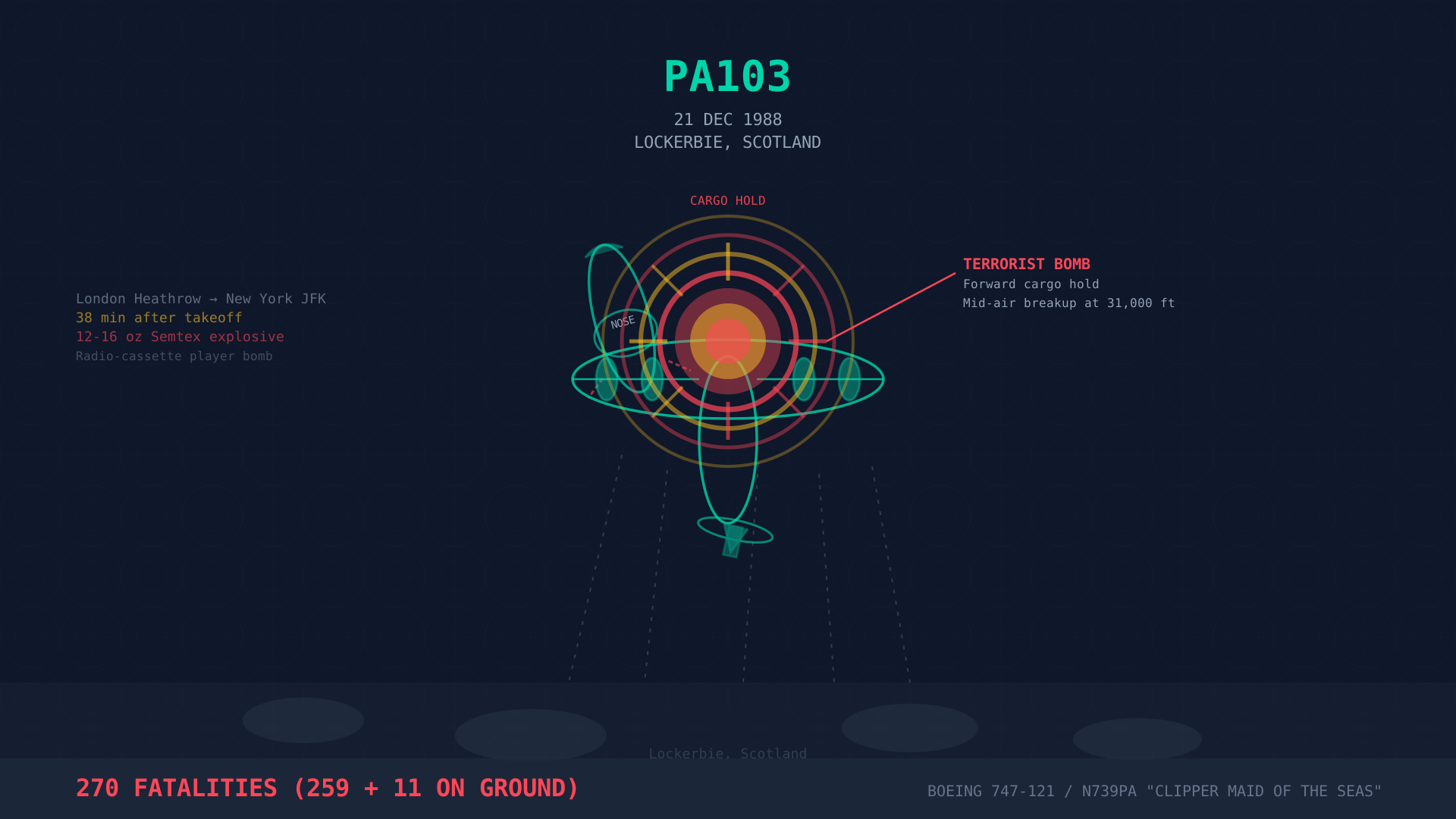
December 21, 1988
Pan Am Flight 103
A terrorist bomb destroyed a 747 over Scotland, killing all 259 aboard and 11 on the ground, exposing critical gaps in aviation security and triggering fundamental changes in baggage screening worldwide.
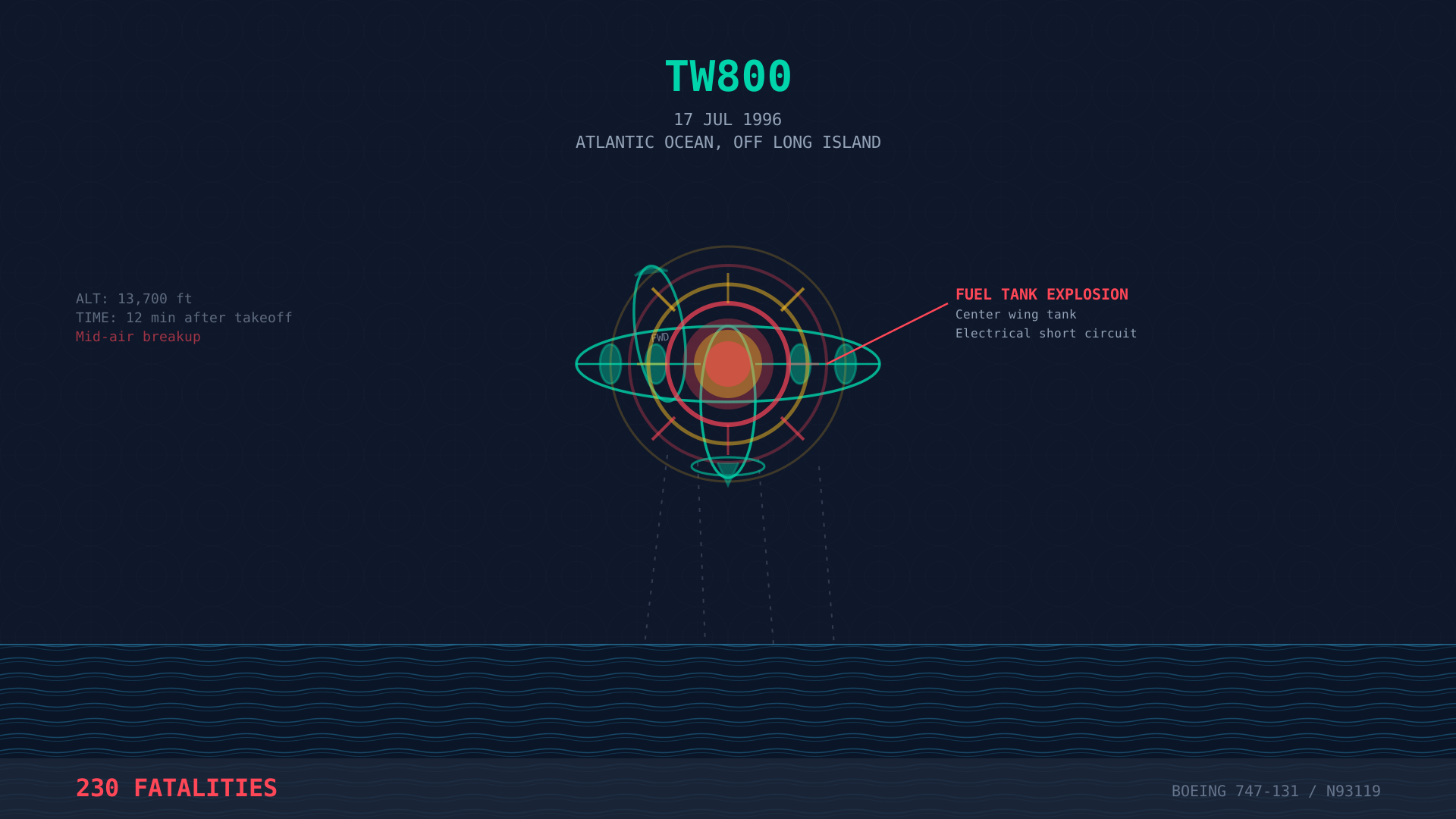
July 17, 1996
TWA Flight 800
A Boeing 747 exploded over the Atlantic Ocean 12 minutes after takeoff, killing all 230 aboard and triggering one of aviation's most controversial investigations into fuel tank safety.
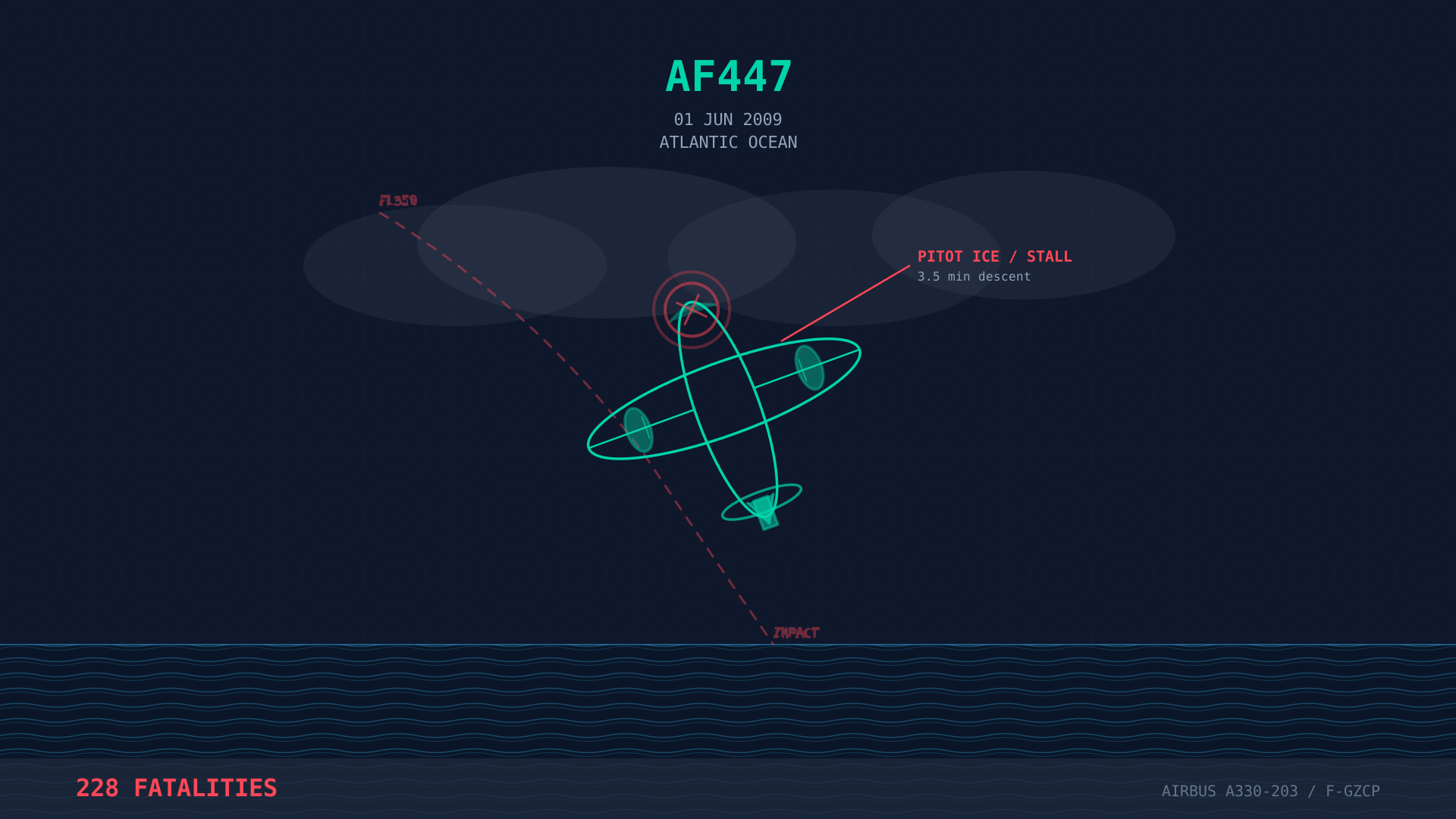
June 1, 2009
Air France Flight 447
Pitot tube icing led to automation disconnect and pilot confusion, resulting in a high-altitude stall that lasted over three minutes before the aircraft crashed into the Atlantic Ocean, killing all 228 aboard.
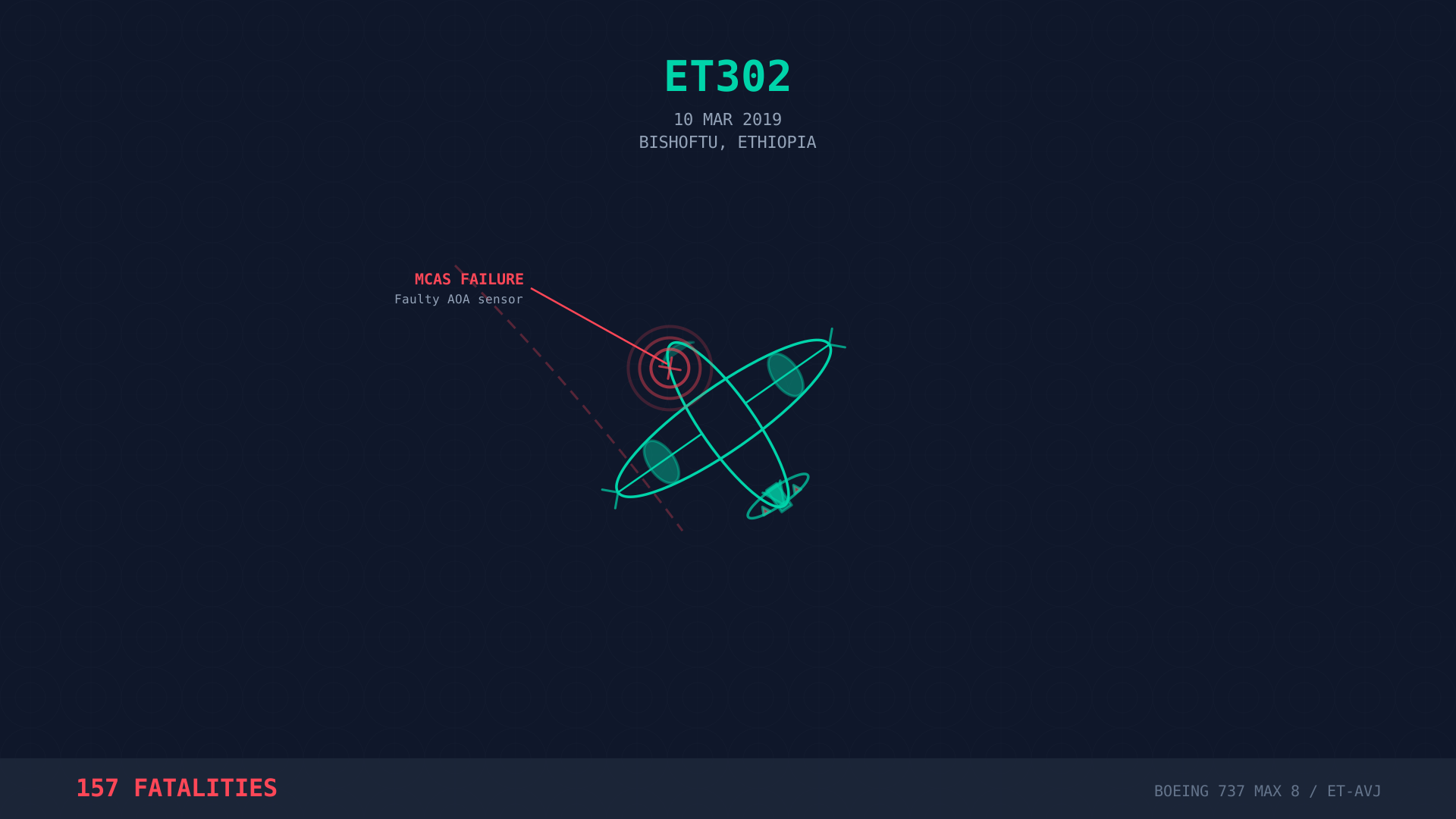
March 10, 2019
Ethiopian Airlines Flight 302
A faulty angle-of-attack sensor triggered the MCAS system on a Boeing 737 MAX 8, leading to loss of control and crash six minutes after takeoff, killing all 157 aboard and grounding the entire MAX fleet worldwide.
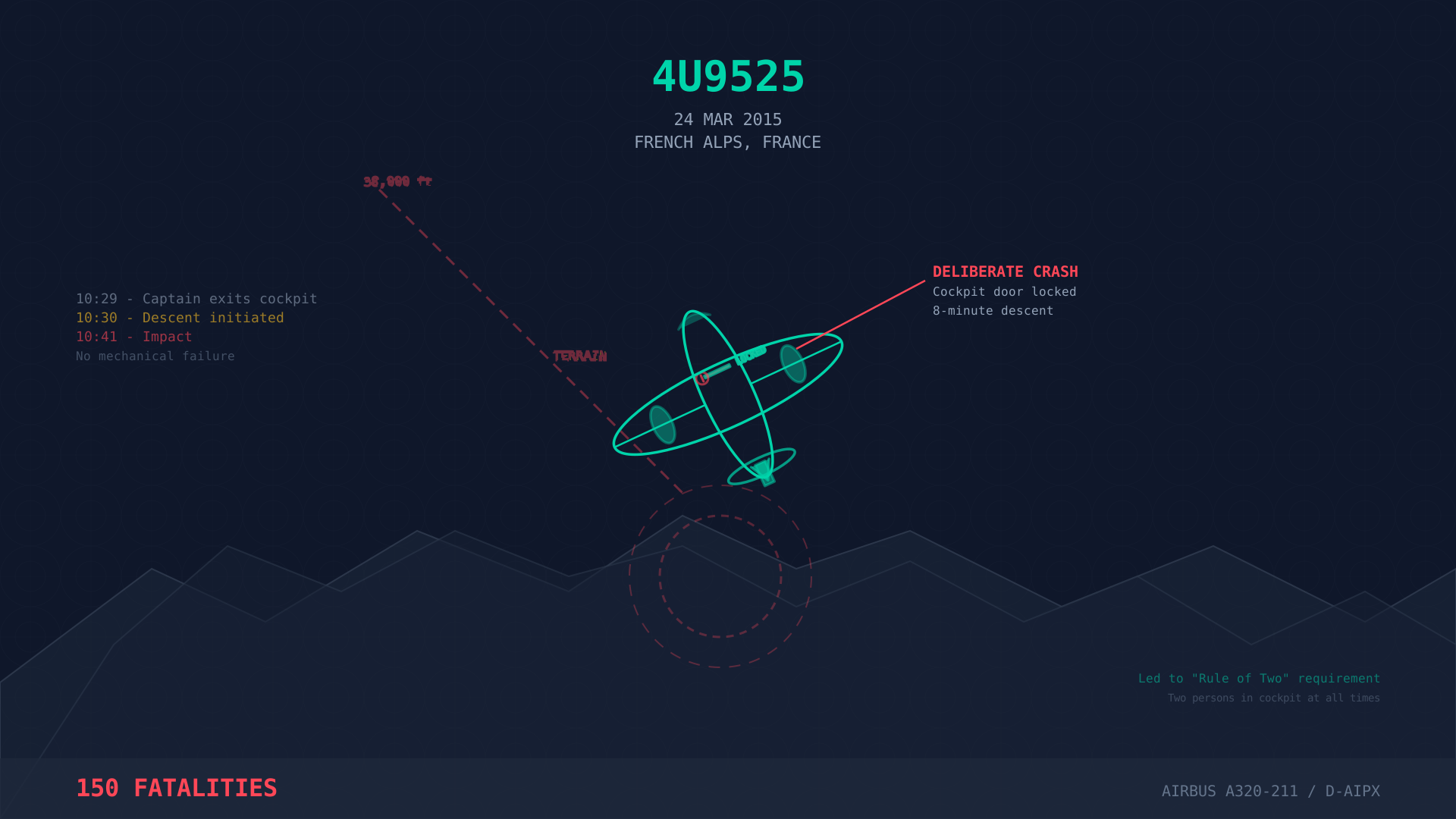
March 24, 2015
Germanwings Flight 9525
When the captain left the cockpit, the co-pilot locked the door and deliberately flew the A320 into the French Alps, killing all 150 aboard and exposing critical gaps in pilot mental health oversight.
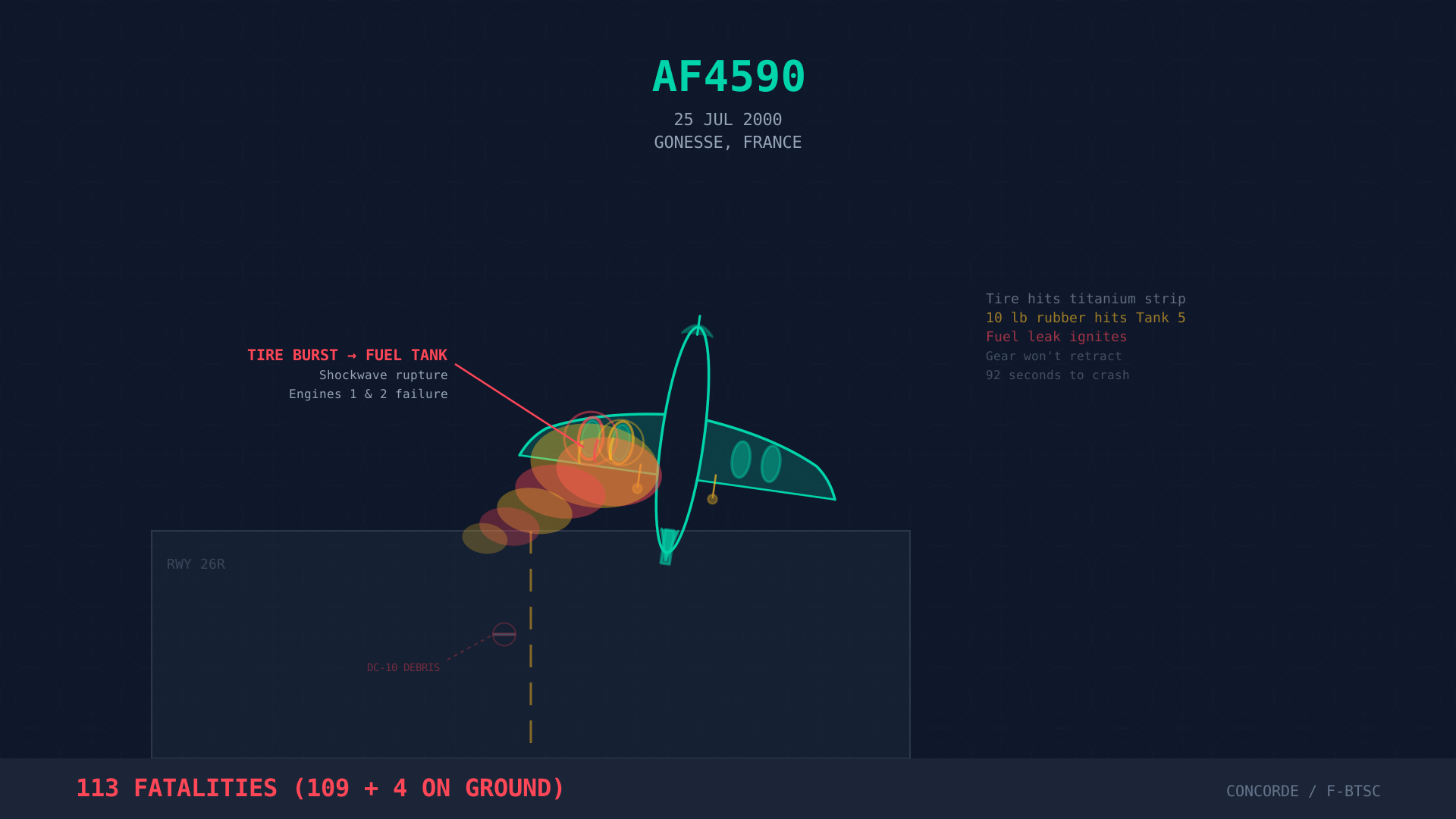
July 25, 2000
Air France Flight 4590
A tire burst during takeoff triggered a catastrophic chain reaction that destroyed the supersonic Concorde, killing all 109 aboard and 4 on the ground—the only fatal crash of the iconic aircraft and the beginning of its end.
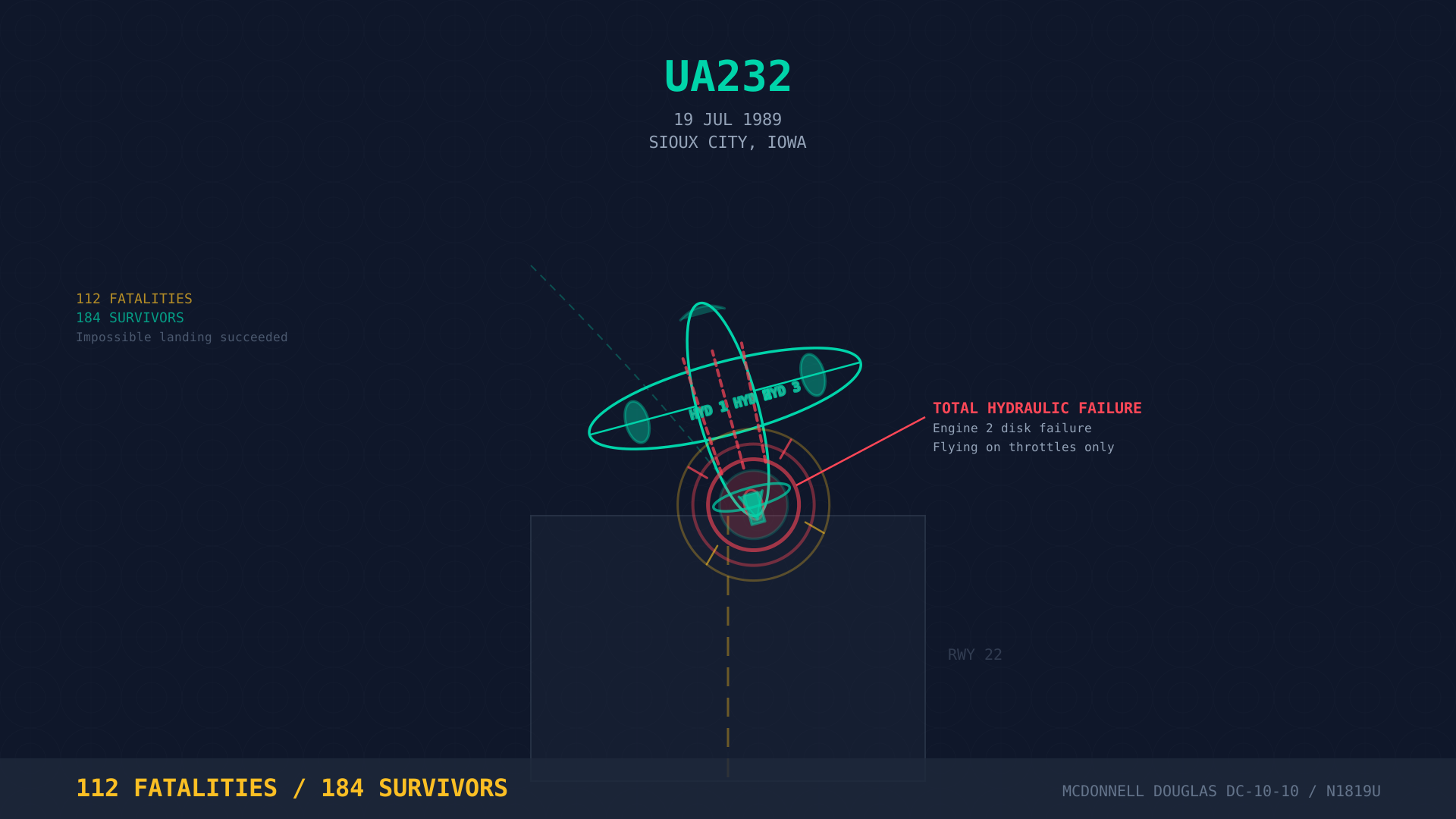
July 19, 1989
United Airlines Flight 232
After total hydraulic failure left the DC-10 nearly uncontrollable, exceptional crew resource management enabled a crash landing that saved 184 of 296 lives—a feat once thought impossible.
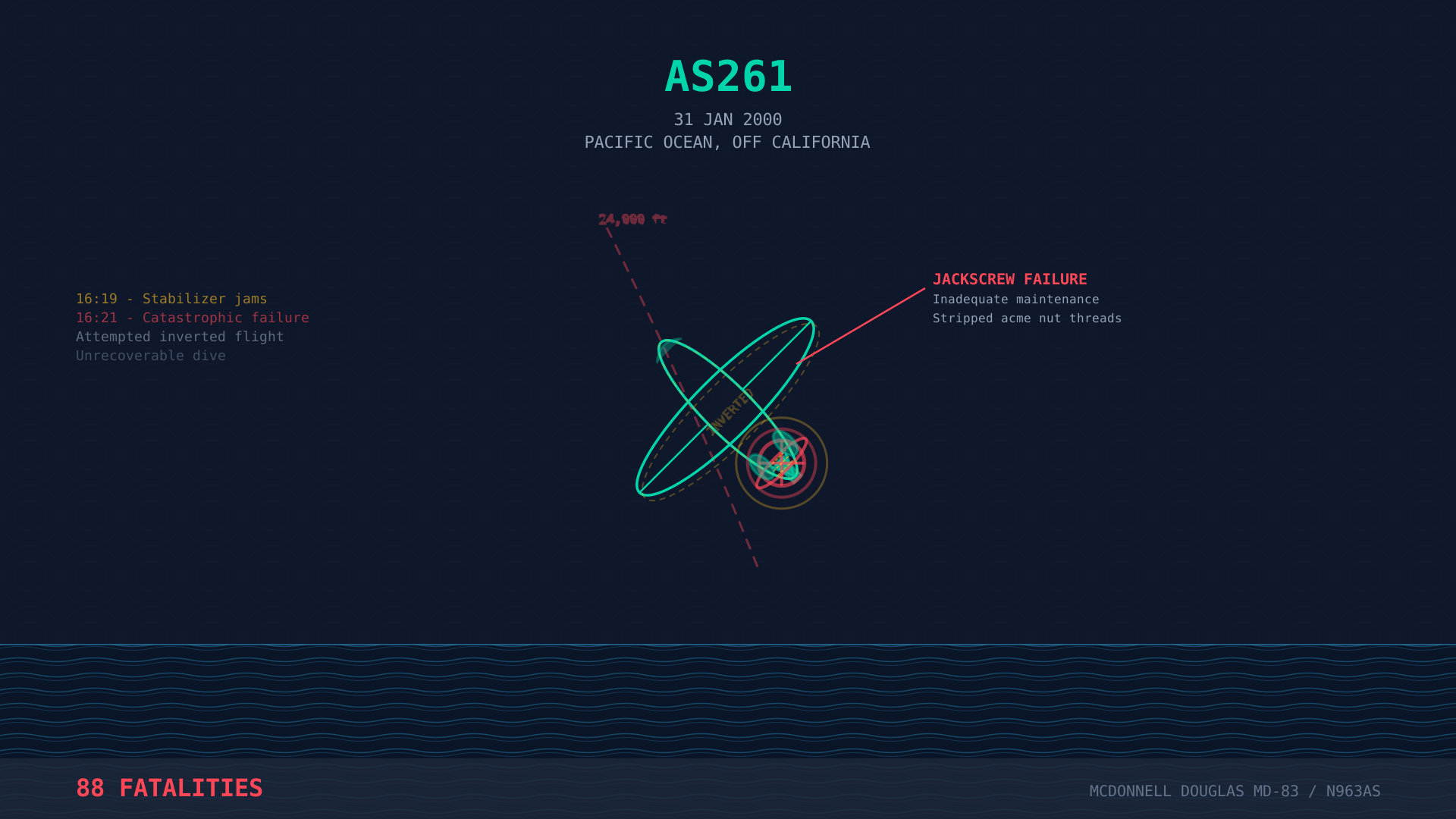
January 31, 2000
Alaska Airlines Flight 261
When the horizontal stabilizer jackscrew failed due to inadequate maintenance, pilots fought desperately to control the MD-83, even attempting to fly it inverted, before it plunged into the Pacific Ocean killing all 88 aboard.
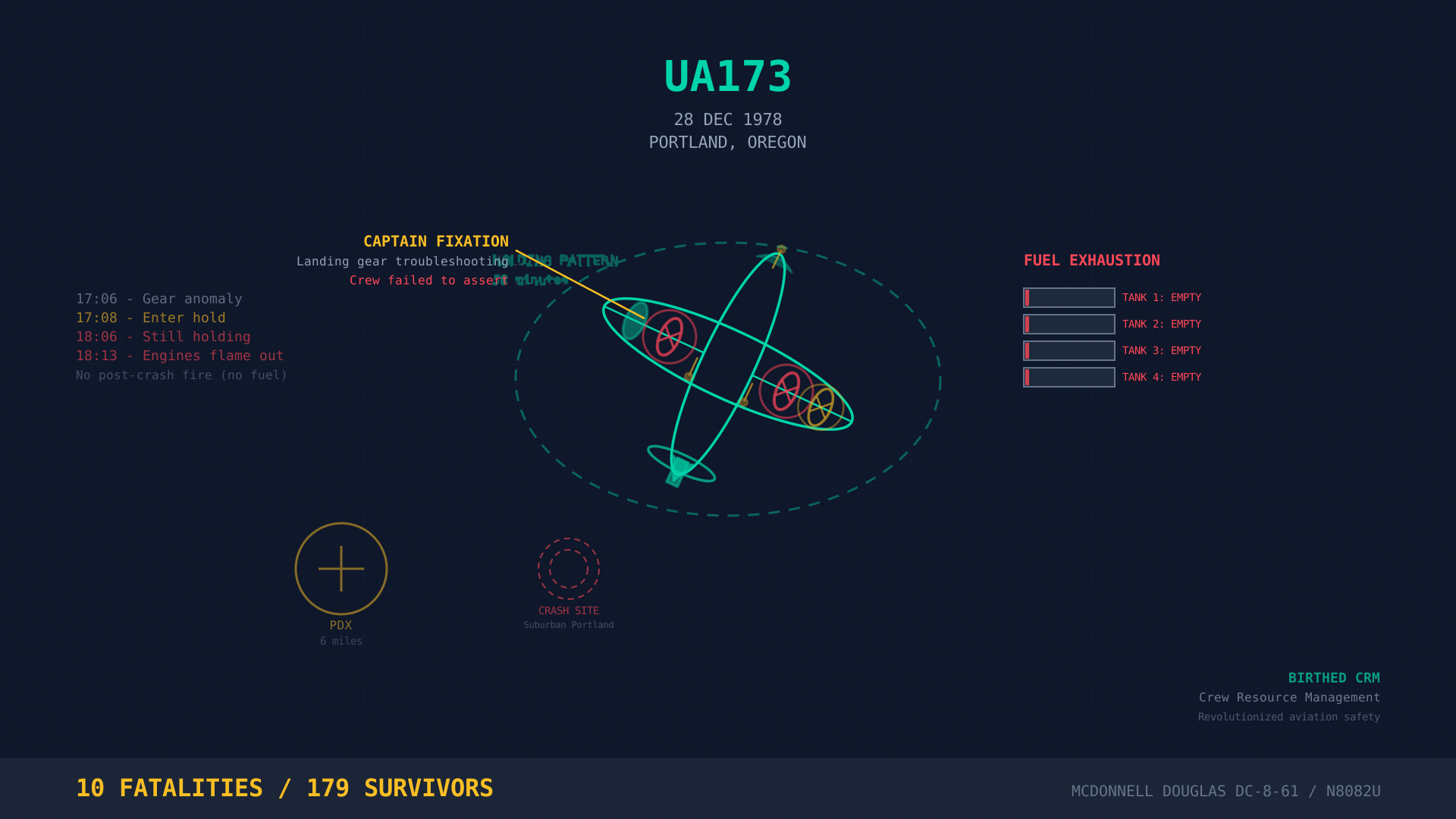
December 28, 1978
United Airlines Flight 173
A DC-8 ran out of fuel and crashed while the captain focused on a landing gear problem, killing 10—but the accident birthed Crew Resource Management and revolutionized how pilots work together, saving countless lives.